


Snoring is common, and for many people, it may seem like nothing more than a nighttime nuisance. But loud or persistent snoring can sometimes signal a more serious sleep-related breathing problem.
One condition not to overlook is obstructive sleep apnea (OSA). It can cause repeated interruptions in breathing during sleep and may affect sleep quality, daytime energy, concentration, and overall health.
So, how can you tell the difference between ordinary snoring and sleep apnea? And when should you see an ENT doctor for snoring?
For people living in Dubai, understanding the warning signs and getting the right assessment can be an important step toward better sleep and breathing.
Is Snoring Always a Sign of Sleep Apnea?
No.
Snoring happens when airflow through the nose and throat becomes partially restricted during sleep. As air moves through narrowed or relaxed tissues, they can vibrate and produce the familiar snoring sound.
Occasional snoring can happen because of factors such as nasal congestion, sleeping position, alcohol consumption, or temporary illness.
However, loud and persistent snoring, especially when accompanied by pauses in breathing or gasping during sleep, deserves further evaluation.
Sleep apnea is different because breathing repeatedly stops or becomes significantly reduced during sleep.
What Is Sleep Apnea?
Sleep apnea is a sleep disorder in which breathing is repeatedly interrupted during sleep.
The most common type is obstructive sleep apnea, which occurs when the upper airway becomes blocked or collapses during sleep.
A person may not remember waking up during these episodes. However, the repeated interruptions can prevent normal restorative sleep.
Common signs can include:
- Loud, persistent snoring
- Pauses in breathing noticed by a partner
- Gasping or choking during sleep
- Waking with a dry mouth
- Morning headaches
- Excessive daytime sleepiness
- Difficulty concentrating
- Irritability or mood changes
- Feeling tired despite spending enough time in bed
Not everyone who snores has sleep apnea, and not everyone with sleep apnea necessarily snores loudly.
Snoring vs Sleep Apnea: What Is the Difference?
The biggest difference is what happens to breathing during sleep.
With simple snoring, airflow may be noisy because tissues in the upper airway vibrate, but breathing generally continues.
With obstructive sleep apnea, the airway can become sufficiently narrowed or blocked that breathing repeatedly stops or is significantly reduced.
A person with sleep apnea may then briefly wake or partially arouse to reopen the airway. These episodes can happen many times during the night without the person being aware of them.
This is why persistent snoring should not automatically be dismissed as harmless—particularly when other symptoms are present.
When Should You See an ENT Doctor for Snoring?
You do not necessarily need medical treatment for occasional, mild snoring.
However, you should consider seeing an ENT doctor for snoring when it is frequent, loud, worsening, or affecting your sleep or your partner’s sleep.
An ENT assessment is particularly important if you have:
- Snoring most nights
- Breathing pauses during sleep
- Gasping or choking at night
- Persistent nasal blockage
- Difficulty breathing through the nose
- Morning headaches
- Excessive daytime tiredness
- Difficulty concentrating during the day
- Repeated nighttime awakenings
- High blood pressure or other health concerns associated with sleep apnea
If your partner tells you that you stop breathing during sleep, do not ignore it simply because you feel fine during the day.
Why See an ENT Doctor for Snoring?
Snoring can have several possible causes, and an ENT specialist can assess the structures involved in breathing.
The nose, nasal septum, throat, tonsils, tongue, and other upper-airway structures can all contribute to airway narrowing.
An ENT doctor may assess whether problems such as:
- Deviated nasal septum
- Nasal polyps
- Chronic nasal congestion
- Enlarged tonsils
- Enlarged tissues in the throat
- Nasal obstruction
could be contributing to your symptoms.
This can be particularly useful for people who experience both snoring and difficulty breathing through the nose.
However, sleep apnea is not purely an ENT problem. Depending on the findings, an ENT doctor may work with a sleep specialist or other healthcare professional to complete the evaluation.
What Happens During a Sleep Apnea Evaluation?
A doctor will usually start by discussing your symptoms and medical history.
You may be asked about:
- How often you snore
- Whether anyone has noticed breathing pauses
- Daytime sleepiness
- Nighttime choking or gasping
- Morning headaches
- Sleep patterns
- Nasal breathing
- Medications and lifestyle factors
- Other medical conditions
Your doctor may also examine your nose and throat.
If sleep apnea is suspected, you may be advised to undergo a sleep study. Depending on your situation, this may be performed in a sleep centre or, for selected patients, using a home sleep apnea test.
The test helps determine whether breathing interruptions are occurring during sleep and how frequently they happen.
Can Nasal Problems Cause Snoring?

Yes.
Nasal obstruction can make it harder to breathe comfortably through the nose and may contribute to mouth breathing and snoring.
Conditions such as allergic rhinitis, chronic sinus problems, nasal polyps, or a deviated septum can contribute to nasal blockage.
This does not mean that correcting a nasal problem will automatically cure sleep apnea. Obstructive sleep apnea can involve multiple areas of the upper airway.
However, identifying and treating significant nasal obstruction may be an important part of managing breathing and sleep-related symptoms.
Snoring Treatment in Dubai: What Are the Options?
The appropriate snoring treatment in Dubai depends on the underlying cause.
For some people, simple changes may help reduce snoring. These can include:
- Maintaining a healthy weight where appropriate
- Sleeping on your side
- Avoiding alcohol close to bedtime
- Managing nasal congestion
- Maintaining regular sleep habits
- Addressing factors that worsen nighttime breathing
If an underlying nasal or throat problem is identified, medical treatment may be recommended.
For example, treatment of allergies or nasal inflammation may help improve nasal breathing.
In selected cases, an ENT specialist may discuss a procedure if a structural problem is contributing significantly to airway obstruction.
The key is to identify the cause rather than treating snoring based only on how loud it sounds.
What Is Sleep Apnea Treatment in Dubai?
Sleep apnea treatment in Dubai depends on the type and severity of sleep apnea, as well as the patient’s overall health and individual circumstances.
For obstructive sleep apnea, treatment may include:
Continuous Positive Airway Pressure (CPAP)
CPAP uses a device that delivers a continuous flow of air through a mask to help keep the airway open during sleep. It is a common treatment for obstructive sleep apnea.
Oral Appliances
For some patients, a specially fitted oral appliance may help reposition the jaw or tongue to reduce airway obstruction. These devices are not suitable for everyone and should be prescribed based on an appropriate assessment.
Lifestyle Changes
Weight management, regular physical activity, avoiding alcohol near bedtime, and addressing sleep position may be recommended as part of a broader treatment plan.
Surgery
Surgery may be considered in selected patients when anatomical abnormalities contribute to airway obstruction or when other treatments are unsuitable or insufficient.
An ENT specialist can determine whether an anatomical issue may benefit from surgical treatment.
Can Sleep Apnea Be Dangerous?
Untreated obstructive sleep apnea is associated with several health risks.
Repeated breathing interruptions and sleep fragmentation can affect daytime alertness and quality of life. Sleep apnea is also associated with cardiovascular and metabolic health problems.
Excessive daytime sleepiness can be particularly concerning when driving or performing activities that require sustained attention.
This is why persistent symptoms should be assessed rather than assuming that snoring is simply a normal part of getting older.
When Should You See a Sleep Specialist in Dubai?
An ENT doctor may be an appropriate starting point when nasal or upper-airway problems are suspected.
However, a sleep specialist in Dubai may be involved when symptoms strongly suggest a sleep disorder or when a sleep study and long-term sleep apnea management are required.
In some cases, care may involve both an ENT specialist and sleep medicine professional.
This multidisciplinary approach can be useful because sleep apnea may involve more than one contributing factor.
What Can You Do If Your Partner Snores?
If someone tells you that you snore loudly, take the observation seriously—particularly if they have noticed pauses in breathing, choking, or gasping.
A useful first step is to discuss the symptoms with a doctor.
Keeping track of how often the snoring occurs and whether there are associated symptoms can help during the consultation.
If possible, your sleep partner can also describe what they have observed because people with sleep apnea often do not realise that their breathing is being interrupted.
Don’t Ignore Persistent Snoring
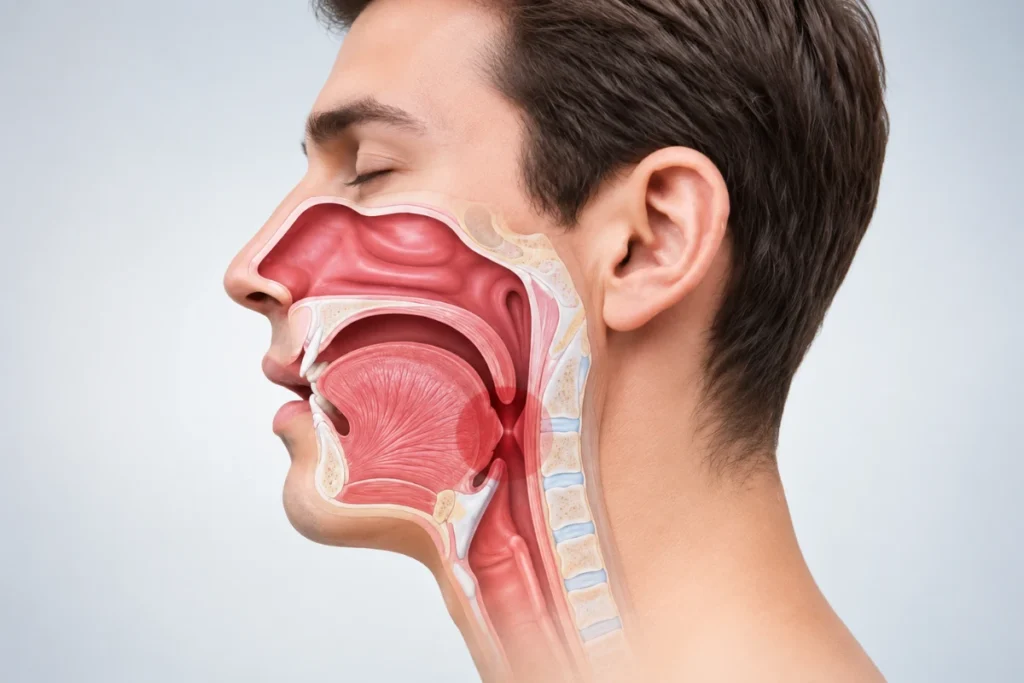
Snoring does not always mean sleep apnea, but persistent or loud snoring should not automatically be dismissed as harmless.
The difference between ordinary snoring and sleep apnea often becomes clearer when you consider the other symptoms: breathing pauses, gasping, daytime sleepiness, morning headaches, and poor-quality sleep can all indicate that further assessment is needed.
For people looking for a sleep apnea doctor in Dubai, snoring treatment in Dubai, or a sleep specialist in Dubai, the right starting point is an appropriate medical evaluation.
An ENT doctor can assess the nose and upper airway, while sleep testing can determine whether sleep apnea is present.
The goal is not simply to make snoring quieter. It is to understand why it is happening and make sure a potentially significant sleep-related breathing disorder is not being overlooked.
Frequently Asked Questions
1. How can I tell the difference between snoring and sleep apnea?
Simple snoring involves noisy breathing during sleep, while sleep apnea involves repeated interruptions or significant reductions in breathing. Loud snoring accompanied by gasping, choking, or observed pauses in breathing should be medically evaluated.
2. When should I see an ENT doctor for snoring?
Consider seeing an ENT doctor for snoring if you snore regularly, have persistent nasal blockage, wake up gasping or choking, experience daytime tiredness, or someone notices that your breathing stops during sleep.
3. Can an ENT doctor treat snoring?
Yes. An ENT doctor can evaluate the nose and upper airway for problems that may contribute to snoring, such as nasal obstruction, a deviated septum, nasal polyps, or enlarged throat structures. Treatment depends on the underlying cause.
4. What is the treatment for sleep apnea in Dubai?
Sleep apnea treatment in Dubai may include CPAP, oral appliances, lifestyle measures, treatment of nasal or airway problems, or surgery in selected cases. The appropriate treatment depends on the type and severity of sleep apnea.
5. Can snoring be a sign of sleep apnea?
Yes. Snoring is a common symptom of obstructive sleep apnea, but most people who snore do not necessarily have sleep apnea. Snoring combined with breathing pauses, gasping, choking, or excessive daytime sleepiness is more concerning.
6. Should I see a sleep specialist or an ENT doctor for snoring?
It depends on the symptoms. An ENT doctor can assess structural or nasal causes of snoring, while a sleep specialist in Dubai can evaluate suspected sleep apnea and arrange appropriate sleep testing. Some patients may benefit from both specialists.