
Finding a lump or nodule on the thyroid can be worrying, especially when you do not know what it means. Thyroid nodules are relatively common and, in many cases, they are harmless. However, some nodules require further investigation, treatment, or surgery.
In Dubai, access to thyroid specialists and modern diagnostic services means thyroid nodules can be assessed through a structured approach, rather than assuming every nodule needs to be removed.
The key question isn’t simply “Do I have a thyroid nodule?” but “What type of nodule is it, and does it need treatment?”
If you have been diagnosed with a thyroid nodule, understanding the symptoms, investigations, and situations where surgery may be recommended can help you make a more informed decision with your doctor.
What Is a Thyroid Nodule?
A thyroid nodule is a lump that develops within the thyroid gland, which is located at the front of the neck.
Nodules can be solid, fluid-filled, or a combination of both. They can occur as a single nodule or as multiple nodules within the thyroid.
Most thyroid nodules are benign, meaning they are not cancerous. However, a small proportion can be thyroid cancer, which is why some nodules need careful assessment.
A nodule may be discovered during a routine examination, an ultrasound performed for another reason, or because a person notices a lump in the neck.
What Causes Thyroid Nodules?
There is no single cause of thyroid nodules.
They may be associated with:
- Benign overgrowth of thyroid tissue
- Thyroid cysts
- Inflammation of the thyroid
- Multinodular goitre
- Iodine-related factors
- Certain genetic or medical conditions
- Thyroid cancer in a smaller proportion of cases
Having a thyroid nodule does not automatically mean that you have cancer.
The next step is usually to determine its characteristics and whether it requires further investigation.
What Are the Symptoms of Thyroid Nodules?
Many thyroid nodules cause no symptoms at all and are found incidentally during an examination or imaging scan.
When symptoms occur, they may include:
- A lump or swelling at the front of the neck
- A feeling of pressure in the neck
- Difficulty swallowing
- Difficulty breathing
- A feeling that something is pressing against the throat
- Hoarseness or changes in the voice
- Neck discomfort
These symptoms do not necessarily mean that a nodule is cancerous. However, a new or enlarging neck lump should be assessed by a healthcare professional.
Some thyroid nodules can also produce thyroid hormones. In these cases, symptoms of an overactive thyroid, such as a fast heartbeat, sweating, tremor, anxiety, or unexplained weight loss, may occur.
How Are Thyroid Nodules Diagnosed?
The evaluation of a thyroid nodule usually begins with a medical history and physical examination.
Your doctor may recommend blood tests to check thyroid function, particularly thyroid-stimulating hormone (TSH).
Thyroid Ultrasound
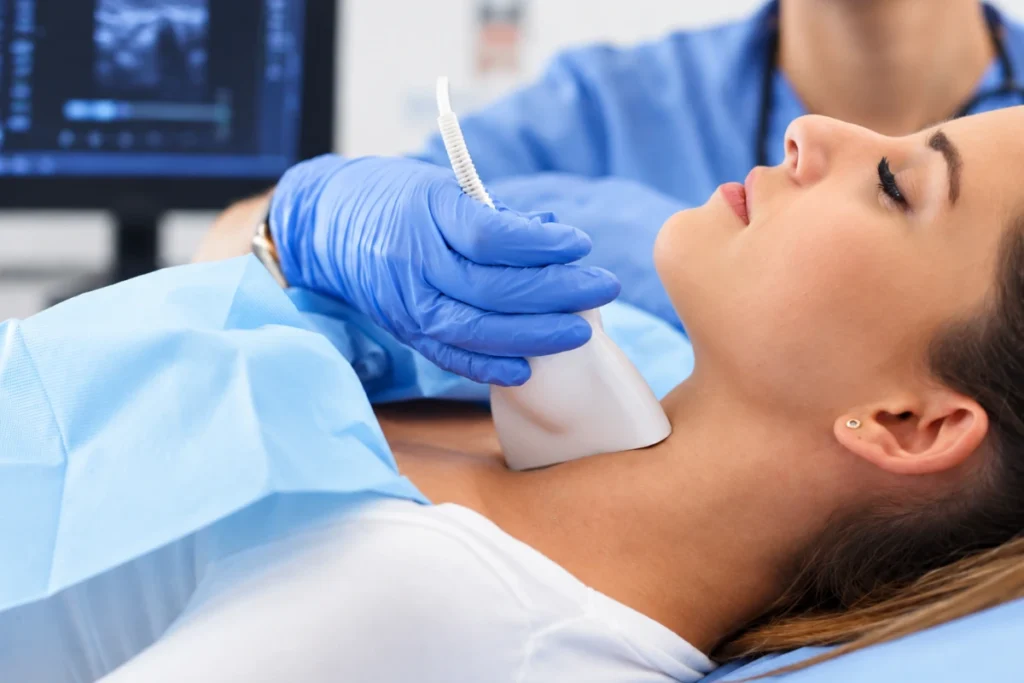
Ultrasound is one of the most important tools used to evaluate thyroid nodules.
It can provide information about:
- The size of the nodule
- Whether it is solid or fluid-filled
- Its shape and margins
- Calcifications or other ultrasound features
- Whether there are other nodules
- Nearby lymph nodes
The ultrasound appearance helps the doctor determine whether a nodule is likely to be benign or whether further investigation is appropriate.
Fine-Needle Aspiration Biopsy
Some nodules require a fine-needle aspiration (FNA) biopsy.
During FNA, a very thin needle is used to collect cells from the thyroid nodule. These cells are then examined by a pathologist.
Not every thyroid nodule requires a biopsy. The decision is generally based on factors such as its size, ultrasound characteristics, clinical history, and risk factors.
When Is Thyroid Nodule Treatment Needed?
Not every thyroid nodule needs active treatment.
If a nodule appears benign, is small, and is not causing symptoms, your doctor may recommend observation with follow-up examinations and ultrasound.
This is an important point for patients searching for thyroid nodule treatment in Dubai: treatment does not always mean surgery.
Depending on the situation, management may involve:
- Regular monitoring
- Repeat ultrasound
- Blood tests
- Fine-needle aspiration
- Medication for an associated thyroid condition
- Treatment for an overactive thyroid
- Surgery in selected cases
The appropriate option depends on the individual nodule.
When Is Thyroid Surgery Recommended?
Thyroid surgery in Dubai may be considered when there is a clear medical reason to remove part or all of the thyroid gland.
Common reasons include:
1. Suspected or Confirmed Thyroid Cancer
If a thyroid nodule is found to be cancerous or highly suspicious, surgery may be recommended.
The type and extent of surgery depend on the type and stage of the thyroid cancer, the size and location of the tumour, and other clinical factors.
2. Suspicious Biopsy Results
Sometimes biopsy results do not provide a definite diagnosis but indicate that the nodule has an uncertain or suspicious risk.
In selected cases, surgery may be recommended to obtain a definitive diagnosis and treat the abnormal thyroid tissue.
3. Large Nodules Causing Pressure Symptoms
A benign nodule may still require surgery if it becomes large enough to cause problems.
Symptoms can include difficulty swallowing, breathing difficulties, neck pressure, or discomfort.
4. Enlarged Thyroid or Multinodular Goitre
A thyroid gland containing multiple nodules may become significantly enlarged.
If the enlargement causes pressure symptoms, affects breathing or swallowing, or has other concerning features, surgery may be considered.
5. Overactive Thyroid Nodule
Some thyroid nodules produce excessive thyroid hormone.
Depending on the cause and the patient’s circumstances, treatment options may include medication, radioactive iodine, or surgery.
A thyroid specialist can discuss which approach is most appropriate.
What Is a Thyroidectomy?
A thyroidectomy is an operation to remove part or all of the thyroid gland.
There are different types of thyroid surgery.
Lobectomy
A thyroid lobectomy removes one side, or lobe, of the thyroid.
This may be considered when the abnormality is limited to one side and a total thyroidectomy is not necessary.
Total Thyroidectomy
A total thyroidectomy removes the entire thyroid gland.
This may be recommended for certain thyroid cancers, large or symptomatic thyroid conditions, or other specific medical situations.
The appropriate operation depends on the diagnosis rather than simply the presence of a thyroid nodule.
What Happens After Thyroidectomy?
If the entire thyroid is removed, the body can no longer produce thyroid hormone naturally.
Patients will therefore generally need lifelong thyroid hormone replacement medication.
After partial thyroid surgery, some patients may continue producing enough thyroid hormone without replacement, while others may need medication.
Your doctor will monitor thyroid function after surgery and adjust medication if necessary.
Are There Risks With Thyroid Surgery?
Like any operation, thyroid surgery has potential risks.
These can include:
- Bleeding
- Infection
- Neck discomfort or scarring
- Temporary or permanent changes in the voice
- Injury to nerves that control the vocal cords
- Low calcium levels due to effects on the parathyroid glands
- The need for thyroid hormone replacement
The likelihood of complications depends on factors such as the type and extent of surgery and the individual patient’s health.
This is why choosing an experienced thyroid specialist in Dubai and discussing the expected benefits and risks before surgery is important.
Can a Benign Thyroid Nodule Be Left Alone?
Yes, in many cases.
If a thyroid nodule has reassuring ultrasound and biopsy findings and is not causing symptoms, immediate surgery may not be necessary.
Instead, your doctor may recommend monitoring the nodule over time.
Follow-up is important because the thyroid can change, and a nodule may increase in size or develop features that require reassessment.
A benign diagnosis should therefore not be interpreted as “never needs checking again.”
When Should You See a Thyroid Specialist in Dubai?
Consider consulting a thyroid specialist in Dubai if you have:
- A new lump in your neck
- A thyroid nodule found on an ultrasound
- An enlarging neck swelling
- Difficulty swallowing
- Difficulty breathing
- Persistent hoarseness
- Abnormal thyroid blood tests
- A family history of certain thyroid cancers
- Previous radiation exposure involving the neck
A specialist can determine whether you need observation, additional testing, biopsy, or treatment.
Choosing Thyroid Surgery in Dubai
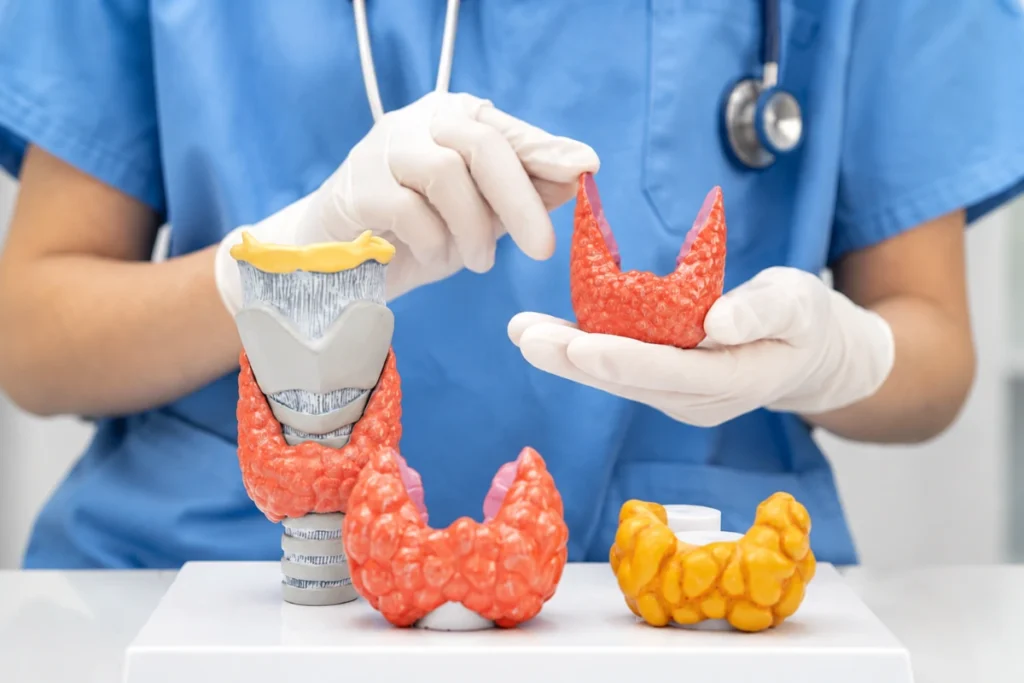
If surgery is recommended, patients should understand exactly why it is being advised.
Before undergoing thyroid surgery in Dubai, ask your doctor:
- Is the nodule benign, suspicious, or cancerous?
- Do I need surgery or can the nodule be monitored?
- Will I need a partial or total thyroidectomy?
- What are the benefits and risks?
- Will I need thyroid hormone medication afterwards?
- What will recovery involve?
- Are there alternatives to surgery in my particular case?
These questions can help you understand your options and make a decision based on your individual diagnosis.
The Bottom Line
A thyroid nodule does not automatically mean you need surgery.
Most thyroid nodules are benign, and many can be safely monitored. Surgery is generally considered when there is a confirmed or suspected cancer, significant pressure symptoms, an enlarged thyroid, certain uncertain biopsy findings, or other specific medical reasons.
If you have been diagnosed with a thyroid nodule, the best approach is to have it properly assessed rather than assuming that it needs to be removed.
For patients looking for thyroid nodule treatment in Dubai, a consultation with an experienced thyroid specialist can help determine the appropriate next step, from observation and ultrasound monitoring to biopsy or thyroidectomy in Dubai when medically indicated.
Early and appropriate evaluation can provide clarity while avoiding unnecessary treatment.
Frequently Asked Questions
1. Are all thyroid nodules cancerous?
No. Most thyroid nodules are benign. However, some nodules have features that require further investigation, which may include ultrasound and, when appropriate, a fine-needle aspiration biopsy.
2. What are the common thyroid nodule symptoms?
Many thyroid nodules have no symptoms. When symptoms occur, they can include a visible or palpable neck lump, pressure in the neck, difficulty swallowing, breathing difficulties, or hoarseness.
3. When does a thyroid nodule need surgery?
Surgery may be recommended when a nodule is confirmed or strongly suspected to be cancerous, causes significant pressure symptoms, is associated with an enlarged thyroid, or has biopsy findings that require surgical diagnosis or treatment.
4. Can a benign thyroid nodule be treated without surgery?
Yes. Many benign nodules do not require surgery and can be monitored with clinical examinations and ultrasound. Treatment may be considered if the nodule grows, causes symptoms, or develops concerning features.
5. What is the difference between a thyroid lobectomy and total thyroidectomy?
A lobectomy removes one lobe of the thyroid, while a total thyroidectomy removes the entire thyroid gland. The appropriate procedure depends on the patient’s diagnosis and individual circumstances.
6. Do you need thyroid medication after thyroid surgery?
After a total thyroidectomy, thyroid hormone replacement medication is generally required because the body can no longer produce thyroid hormone naturally. After a lobectomy, some patients produce sufficient hormone from the remaining thyroid tissue, while others may require replacement.