Facelift surgery has changed significantly over the years. Earlier techniques mainly focused on tightening loose skin, while modern approaches aim to reposition the deeper facial tissues that contribute to sagging, jowls, and loss of facial definition.
Two terms patients commonly encounter during their research are the deep plane facelift and the traditional facelift. Both procedures are designed to improve visible signs of facial ageing, but they differ in the way the underlying tissues are treated, the concerns they address, and the type of result they may produce.
For patients considering Facelift Surgery Dubai, understanding these differences is an important part of making an informed decision. The best technique is not necessarily the newest or most widely discussed option. It is the one that suits the patient’s anatomy, degree of ageing, skin quality, expectations, and medical history.
This guide explains the difference between a Deep Plane Facelift Dubai and a Traditional Facelift Dubai, including how each procedure works, their potential benefits, recovery, and which patients may be suitable candidates.
What Does a Facelift Actually Treat?
A facelift, medically known as rhytidectomy, is a surgical procedure designed to improve visible ageing in the lower face and, depending on the technique, the midface and neck.
Facial ageing does not occur in the skin alone. Over time, several changes happen together:
- The skin gradually loses elasticity.
- Deeper facial tissues descend.
- Facial fat may shift or lose volume.
- The cheeks can appear flatter.
- Lines around the mouth become more noticeable.
- Jowls may develop along the jawline.
- The neck may lose definition.
- The transition between the face and neck becomes less smooth.
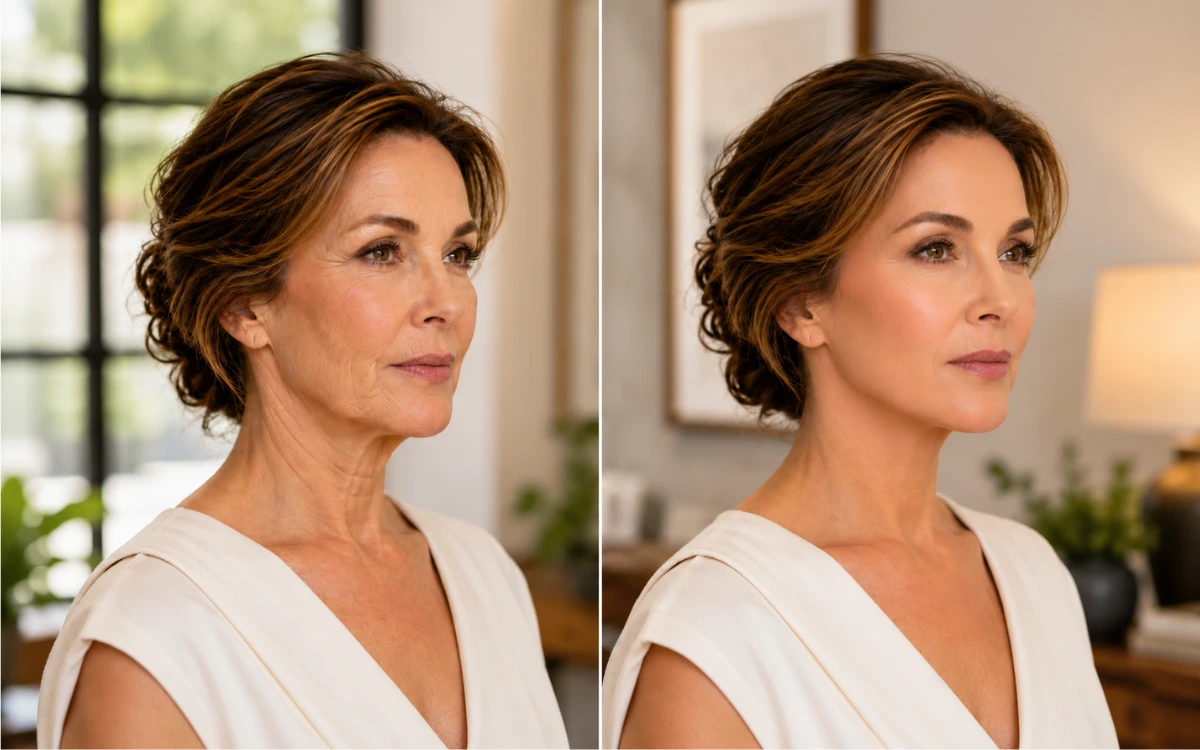
A well-planned facelift aims to reposition these tissues and restore more youthful facial contours without making the face look overly tight or unnatural.
Patients exploring Facelift Surgery Dubai should understand that a facelift does not stop the ageing process. Instead, it repositions the tissues to create a more refreshed starting point from which natural ageing continues.
What Is a Traditional Facelift?
The term “traditional facelift” can refer to several established facelift techniques. In many cases, it involves lifting the skin and tightening or repositioning the superficial musculoaponeurotic system, commonly called the SMAS.
The SMAS is a layer of connective tissue and muscle beneath the skin. It plays an important role in facial structure and movement.
During a traditional facelift, the surgeon usually:
- Makes carefully placed incisions around the ear and hairline.
- Lifts the skin from the underlying tissues.
- Tightens, folds, removes, or repositions part of the SMAS layer.
- Removes excess skin without placing excessive tension on it.
- Closes the incisions in natural creases and discreet areas.
A Traditional Facelift Dubai may be recommended to improve jowls, loose skin, lower facial sagging, and reduced jawline definition.
The exact technique can vary considerably between surgeons. Some traditional facelifts involve limited SMAS tightening, while others include more extensive repositioning of deeper tissues.
What Is a Deep Plane Facelift?
A Deep Plane Facelift is an advanced facelift technique that releases and repositions deeper facial tissues as a connected unit.
Rather than separating the skin extensively from the SMAS and tightening the layers independently, the surgeon works beneath the SMAS in selected areas. This allows the skin, fat, and deeper supportive tissues to move together.
A deep plane facelift may address:
- Sagging cheeks
- Deep nasolabial folds
- Jowls
- Lower facial heaviness
- Loss of jawline definition
- Certain changes in the midface
- Neck laxity when combined with neck surgery
During a Deep Plane Facelift Dubai, the surgeon releases specific retaining ligaments that hold the facial tissues in place. Once these structures are carefully released, the deeper tissues can be elevated and repositioned with less reliance on pulling the skin.
The objective is to restore facial structure while preserving natural movement and avoiding an overly stretched appearance.
Deep Plane Facelift vs Traditional Facelift: The Main Difference
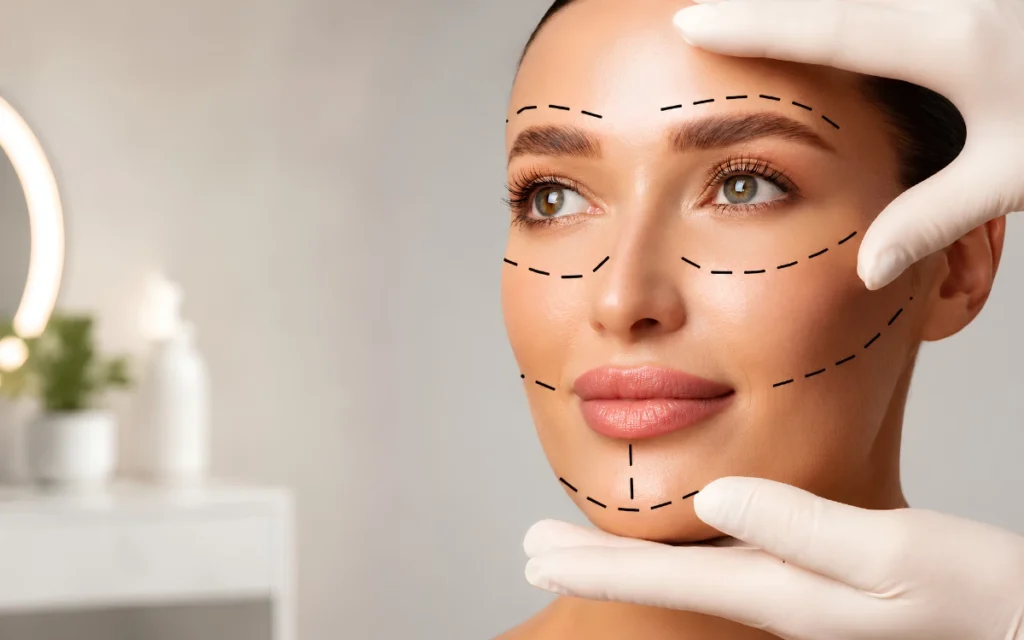
The main difference lies in the surgical plane and how the deeper facial tissues are repositioned.
Traditional Facelift
A traditional facelift usually involves lifting the skin and separately tightening or modifying the SMAS layer.
Depending on the technique, the surgeon may fold, stitch, trim, or lift the SMAS to improve facial definition.
Deep Plane Facelift
A deep plane facelift works beneath the SMAS and repositions the skin and deeper tissues together after releasing selected facial ligaments.
This can allow more movement of the midface and lower facial tissues without placing excessive tension on the skin.
In simple terms, a traditional facelift often tightens and adjusts facial layers separately, while a deep plane facelift lifts a deeper composite layer as one unit.
Areas Each Procedure Can Improve
Both procedures can improve signs of ageing, but their strengths may differ depending on the patient’s anatomy.
Concerns Commonly Addressed by a Traditional Facelift
A Traditional Facelift Dubai may be suitable for:
- Loose lower facial skin
- Mild to moderate jowls
- Reduced jawline definition
- Early neck laxity
- General lower facial ageing
Traditional techniques can provide excellent results when performed appropriately and selected for the right patient.
Concerns Commonly Addressed by a Deep Plane Facelift
A Deep Plane Facelift may be considered for:
- More pronounced jowls
- Significant tissue descent
- Heavier lower facial ageing
- Deep folds between the nose and mouth
- Sagging of the cheek tissues
- Loss of midface support
- A desire for comprehensive facial repositioning
However, not every patient requires a deep plane technique. A more extensive procedure is not automatically better when a less invasive approach can adequately address the concern.
Which Technique Creates More Natural Results?
Natural-looking results depend on far more than the name of the technique.
They are influenced by:
- The surgeon’s understanding of facial anatomy
- Accurate patient selection
- Direction of tissue repositioning
- Management of facial volume
- Avoidance of excessive skin tension
- Careful incision placement
- Preservation of individual facial identity
A deep plane facelift is often associated with natural-looking rejuvenation because the deeper tissues are repositioned rather than relying heavily on skin tightening.
However, a well-performed traditional facelift can also produce refined and natural results. Problems such as a stretched appearance usually arise from excessive skin tension, poor planning, inappropriate technique, or overcorrection rather than from the traditional approach itself.
Patients considering Facelift Surgery Dubai should therefore focus less on fashionable terminology and more on the surgeon’s experience, treatment philosophy, and ability to recommend the right procedure.
Is a Deep Plane Facelift Better for the Midface?
One of the frequently discussed benefits of a Deep Plane Facelift is its ability to improve tissue descent in the midface and lower face.
As the deeper tissues are released and repositioned, the procedure may improve cheek support and soften certain folds around the mouth.
Traditional lower facelifts are often very effective for the jawline and jowls, but they may have a more limited effect on the central midface unless combined with additional techniques.
That said, the degree of midface improvement varies. Deep folds and volume loss may not completely disappear through lifting alone. Fat grafting, eyelid surgery, skin resurfacing, or other treatments may be recommended when appropriate.
What About the Neck?
Facelift and neck ageing often occur together.
A facelift can improve the jawline and upper neck, but patients with significant neck laxity may require a dedicated neck lift.
Neck treatment may involve:
- Removal of excess fat
- Tightening of the platysma muscle
- Correction of visible neck bands
- Repositioning of deeper tissues
- Removal of excess skin
Both a Traditional Facelift Dubai and a Deep Plane Facelift Dubai can be combined with neck lift surgery.
The need for neck surgery depends on the patient’s anatomy rather than the facelift technique alone.
Incisions and Scarring
Both procedures usually require incisions around the ears and hairline.
The incision may begin near the temple, continue around the front of the ear, pass behind the ear, and extend into the hairline. The exact pattern varies according to the surgical plan.
Scars are usually placed in natural creases and less visible areas. They often become less noticeable as healing progresses, although no surgeon can promise completely invisible scars.
Factors that influence scar quality include:
- Genetics
- Skin type
- Smoking
- Sun exposure
- Wound care
- Tension on the incision
- Previous scarring history
Careful surgical closure and proper aftercare can support better scar healing.
Recovery After a Traditional Facelift
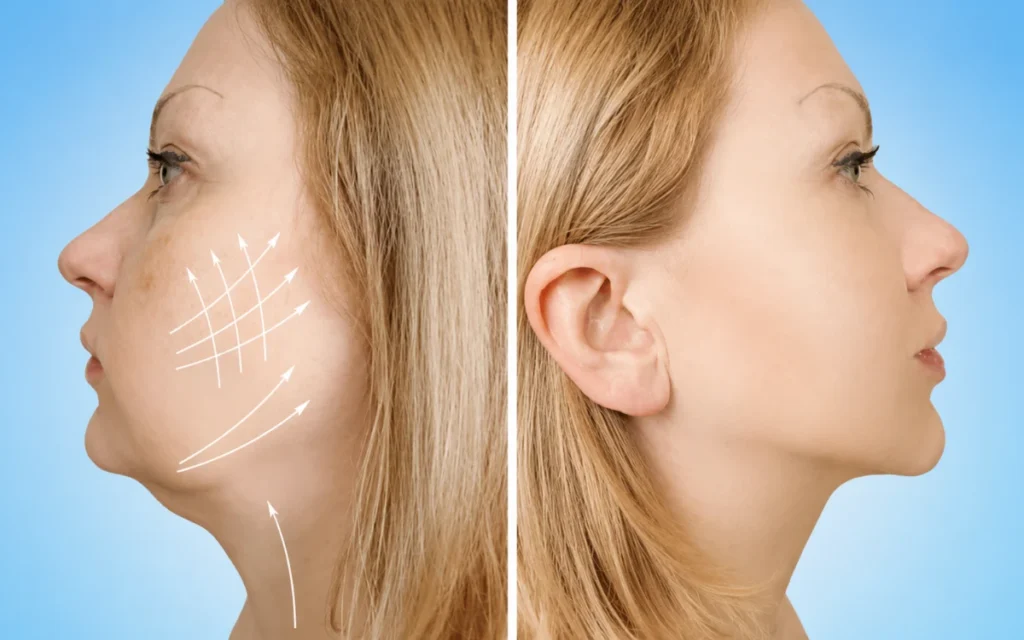
Recovery after a Traditional Facelift Dubai varies according to the extent of surgery.
During the early recovery period, patients may experience:
- Swelling
- Bruising
- Tightness
- Temporary numbness
- Mild to moderate discomfort
- Changes in facial sensation
Many patients feel comfortable returning to social or professional activities after approximately two to three weeks, although visible swelling may continue to improve over several weeks.
Final results take longer to settle as the tissues soften and the face regains a more natural appearance.
Recovery After a Deep Plane Facelift
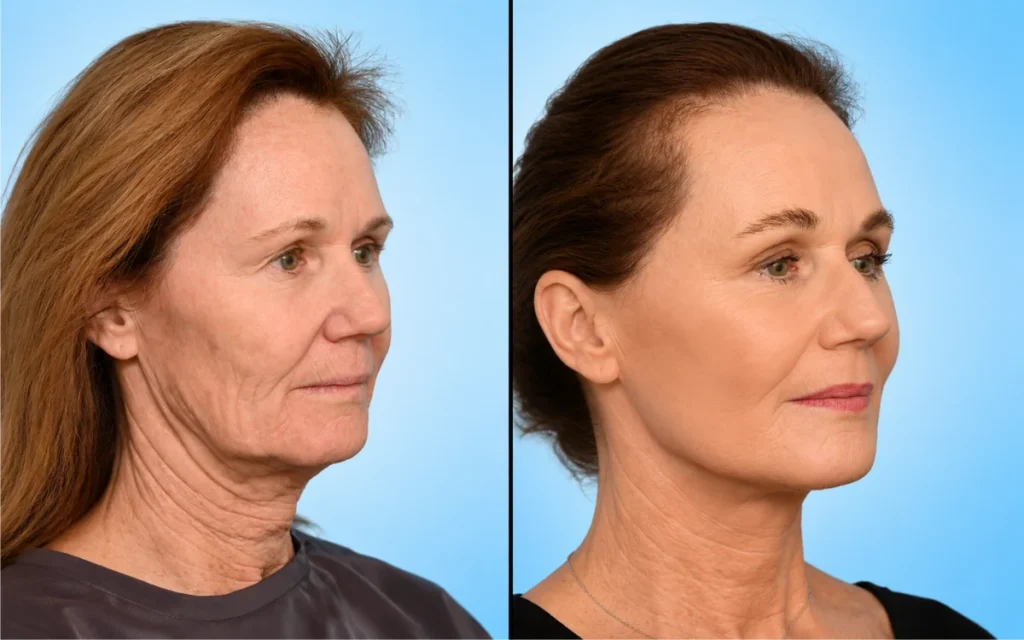
Recovery after a Deep Plane Facelift Dubai also involves swelling, bruising, and temporary tightness.
Some people assume that deep plane surgery always has a shorter recovery because there may be less skin tension. However, recovery depends on the extent of surgery, individual healing, whether the neck is treated, and whether additional procedures are performed.
Patients may need approximately two to three weeks before feeling socially comfortable, while residual swelling can persist for longer.
Temporary numbness or altered sensation may occur and usually improves gradually.
It is important to follow all post-operative instructions, including guidance on sleeping position, wound care, activity restrictions, and follow-up appointments.
How Long Do the Results Last?
Both traditional and deep plane facelift results can last for many years.
A Deep Plane Facelift is often described as long-lasting because the deeper tissues are released and repositioned. However, longevity cannot be guaranteed based on technique alone.
The result is also influenced by:
- Age at the time of surgery
- Skin elasticity
- Genetics
- Weight changes
- Sun exposure
- Smoking
- General health
- Quality of surgical correction
- Natural ageing
A facelift can create a meaningful and durable improvement, but it does not freeze the face in time.
Patients generally continue to look younger than they might have without surgery, even as the ageing process continues.
Risks of Facelift Surgery
All surgical procedures involve potential risks.
Possible risks of facelift surgery may include:
- Bleeding or haematoma
- Infection
- Delayed wound healing
- Temporary or persistent numbness
- Facial nerve weakness or injury
- Hairline changes
- Hair loss around incisions
- Uneven contours
- Asymmetry
- Visible scarring
- Skin healing problems
- Anaesthesia-related complications
- Need for revision surgery
Some risks may be influenced by smoking, uncontrolled medical conditions, medications, previous surgery, and the complexity of the procedure.
A detailed consultation is essential before undergoing any form of Facelift Surgery Dubai.
Who May Be Suitable for a Traditional Facelift?
A traditional facelift may be appropriate for patients who:
- Have mild to moderate lower facial sagging
- Are mainly concerned about jowls and loose skin
- Have relatively good midface position
- Want a proven surgical approach
- Do not require extensive deep tissue release
- Are medically suitable for elective surgery
Traditional techniques remain highly effective and should not be viewed as outdated simply because newer methods are available.
Who May Be Suitable for a Deep Plane Facelift?
A deep plane facelift may be considered for patients who:
- Have moderate to advanced facial ageing
- Have noticeable descent of the cheeks and lower face
- Are concerned about deeper folds and jowls
- Want more comprehensive tissue repositioning
- Have realistic expectations
- Are medically suitable for a longer or more complex procedure
The decision should be based on anatomy and clinical assessment rather than age alone.
Some younger patients have significant tissue descent, while some older patients may need a more limited procedure.
Can Facelift Surgery Be Combined with Other Procedures?
Yes. Facial ageing affects the skin, fat, muscles, ligaments, eyelids, and neck differently. For this reason, facelift surgery is often combined with other treatments.
Common combinations include:
Neck Lift
Improves loose neck skin, neck bands, and jawline definition.
Blepharoplasty
Addresses excess eyelid skin and under-eye bags.
Facial Fat Grafting
Restores volume in the cheeks, temples, or under-eye region.
Brow Lift
Improves brow descent and heaviness around the upper eyes.
Skin Resurfacing
Targets fine lines, pigmentation, and skin texture.
Combining procedures may create more balanced results, but it can also affect surgery time and recovery. The treatment plan should remain proportionate to the patient’s needs.
Questions to Ask During Your Consultation
Patients considering a Deep Plane Facelift Dubai or Traditional Facelift Dubai should ask:
- Which technique is most suitable for my facial anatomy?
- What areas will the procedure improve?
- Will I also need a neck lift?
- Is volume restoration recommended?
- Where will the incisions be placed?
- What type of anaesthesia will be used?
- What recovery should I realistically expect?
- What are the risks in my individual case?
- How often does the surgeon perform this technique?
- What results are realistic for me?
A good consultation should help the patient understand not only what can improve, but also what surgery cannot fully correct.
How to Choose Between the Two Procedures
There is no universal answer to whether a deep plane or traditional facelift is better.
The right choice depends on:
- Degree of tissue descent
- Midface involvement
- Skin quality
- Neck ageing
- Facial volume
- Previous procedures
- Overall health
- Desired outcome
- Surgeon’s expertise
A patient with early jowling and limited tissue descent may achieve an excellent result with a traditional SMAS-based technique.
A patient with more advanced cheek descent, deeper folds, and lower facial heaviness may benefit from a Deep Plane Facelift.
Choosing the more extensive procedure without a clear anatomical reason does not necessarily create a better result.
Choosing a Facelift Surgeon in Dubai
Facelift surgery requires detailed anatomical knowledge, careful judgement, and extensive surgical experience.
When selecting a surgeon for Facelift Surgery Dubai, consider:
- Recognised surgical qualifications
- Experience in facial plastic or plastic surgery
- Specific experience with the recommended facelift technique
- Access to an appropriately licensed surgical facility
- Clear explanation of benefits and risks
- A personalised rather than standardised plan
- Natural-looking results in suitable before-and-after cases
- Structured post-operative care
Patients should be cautious of guarantees, unusually quick recovery promises, or treatment plans based only on social media trends.
Final Thoughts
The difference between a Deep Plane Facelift Dubai and a Traditional Facelift Dubai lies mainly in how the deeper facial tissues are accessed, released, and repositioned.
A traditional facelift usually lifts the skin and tightens or adjusts the SMAS layer separately. A deep plane facelift works beneath the SMAS and repositions deeper facial tissues as a connected unit.
Both techniques can produce natural and long-lasting improvement when they are performed for the right patient by an appropriately qualified surgeon.
For anyone considering Facelift Surgery Dubai, the most important step is not choosing a procedure based on popularity. It is undergoing a detailed facial assessment to understand which technique can safely and realistically address the individual pattern of ageing.
The goal of facelift surgery should be to restore facial balance, improve definition, and help the patient look refreshed while preserving their natural identity.
Frequently Asked Questions
1. Is a deep plane facelift more invasive?
It works in a deeper anatomical plane and requires detailed release of facial tissues. Whether it is considered more invasive depends on the extent of surgery and the structures treated.
2. Does a deep plane facelift look more natural?
It can produce natural-looking results by repositioning deeper tissues with less dependence on skin tension. However, natural results are also possible with a well-performed traditional facelift.
3. Is a traditional facelift outdated?
No. Modern traditional and SMAS-based techniques remain effective for many patients. The choice should depend on anatomy and treatment goals.
4. Which facelift lasts longer?
Both can provide long-lasting results. Longevity depends on surgical technique, patient anatomy, skin quality, lifestyle, and natural ageing.
5. Can either procedure remove all facial wrinkles?
No. Facelift surgery mainly improves sagging and contour. Fine lines, pigmentation, and skin texture may require separate treatments.
6. What is the best age for facelift surgery?
There is no fixed age. Suitability depends on visible ageing changes, health, anatomy, and expectations rather than the patient’s age alone.