
The facial nerve plays a crucial role in our ability to express emotion, speak, blink, and perform a variety of facial movements. When this nerve is damaged or inflamed, the effects can be physically and emotionally distressing. Facial nerve disorders encompass a range of conditions that interfere with normal facial function, often resulting in weakness, paralysis, or involuntary movements. Prompt and accurate diagnosis is essential in guiding effective treatment and improving outcomes.
This guide explores the different types of facial nerve disorders, how they are diagnosed, and the most effective approaches for facial nerve disorder treatment. It also highlights advanced surgical and non-surgical techniques used today, particularly in specialised practices such as Dr Jerome Paris’s clinic in Dubai.
Understanding the Facial Nerve
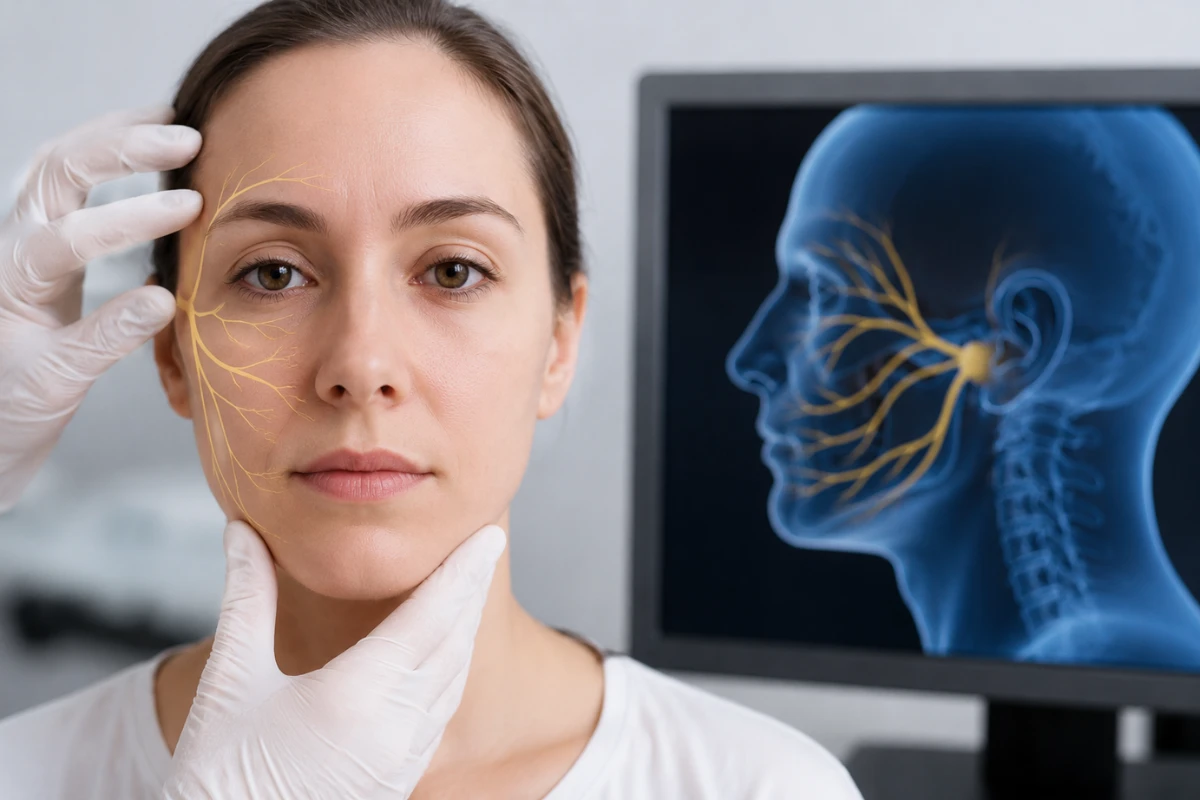
The facial nerve, also known as cranial nerve VII, is responsible for controlling the muscles of facial expression. It also influences functions such as tear and saliva production, and in some cases, taste sensation. This nerve travels through a complex anatomical path from the brainstem to the face, passing through the inner ear and parotid gland before branching into the facial muscles. Given its course, it is vulnerable to damage from a variety of causes, including viral infections, trauma, tumours, surgical complications, and neurological conditions.
When disrupted, even partially, the nerve’s function can be significantly impaired. Patients may notice drooping on one side of the face, difficulty closing the eye, altered speech, and loss of facial symmetry. These symptoms may appear suddenly or gradually, depending on the underlying cause.
Common Types of Facial Nerve Disorders
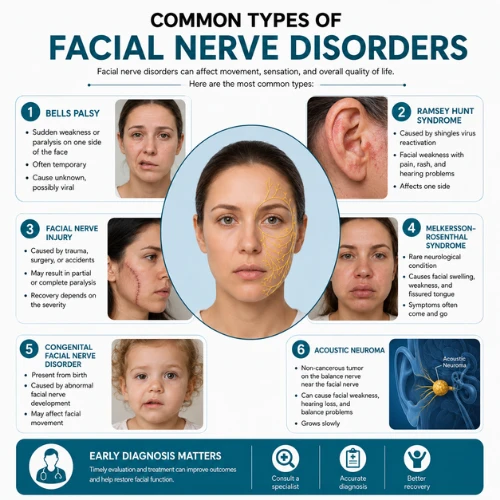
Facial nerve disorders can be classified into several categories depending on their cause and progression. One of the most recognised conditions is Bell’s palsy, which causes sudden weakness or paralysis on one side of the face. Although its exact cause is unclear, it is often linked to viral infections such as herpes simplex. Bell’s palsy symptoms and treatment are widely discussed because the condition is both common and treatable with early intervention.
Other types of facial nerve disorders include Ramsay Hunt syndrome, which results from a reactivation of the varicella-zoster virus and is usually accompanied by ear pain and vesicular rash. Traumatic facial nerve injuries, either from accidents or surgical procedures, can also lead to paralysis. Tumour-related disorders occur when benign or malignant growths compress the nerve along its path, requiring a different approach to both diagnosis and management.
Congenital facial nerve paralysis is less common but may be seen in infants due to birth trauma or developmental anomalies. Each type of disorder presents with specific clinical features that guide the choice of treatment for facial nerve disorders.
How to Diagnose Facial Nerve Disorders
Diagnosing facial nerve disorders begins with a thorough clinical evaluation. A detailed history of symptom onset, progression, associated pain, hearing changes, or previous trauma helps identify potential causes. Physical examination includes assessing facial movements, eye closure, mouth asymmetry, and involuntary movements.
To confirm the diagnosis and locate the site of nerve dysfunction, imaging and nerve function tests are often required. Magnetic resonance imaging (MRI) or computed tomography (CT) scans can detect structural causes such as tumours or fractures. Electromyography (EMG) and nerve conduction studies assess the extent of nerve damage and the likelihood of recovery. Blood tests may be used to identify infections or autoimmune markers.
Understanding how to diagnose facial nerve disorders accurately ensures that the treatment is appropriately matched to the underlying cause, whether it is inflammatory, infectious, traumatic, or neoplastic.
Treatment Options for Facial Nerve Disorders
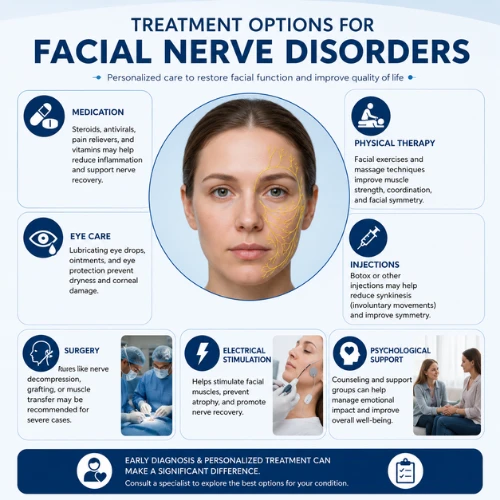
The choice of treatment depends on the cause, severity, and duration of the facial nerve dysfunction. In cases like Bell’s palsy, early administration of corticosteroids within the first seventy-two hours improves recovery significantly. Antiviral medications may be added if a viral origin is suspected. Supportive care, including eye protection and physical therapy, is essential during recovery.
For facial nerve injuries resulting from trauma or surgical complications, treatment may involve surgical exploration or decompression. Facial nerve repair options include direct nerve repair, nerve grafting, or nerve transfers when the damage is extensive. These techniques aim to restore continuity of the nerve pathway or recruit other nerves to take over its function.
Facial paralysis treatment Dubai patients receive in specialised centres may also include reanimation procedures. These are surgical techniques designed to restore movement to the face using local muscle transfers, cross-facial nerve grafts, or free muscle transplantation. These procedures are highly individualised and require careful planning by an experienced facial nerve specialist.
Non-surgical treatments such as neuromuscular retraining therapy, electrical stimulation, and botulinum toxin injections can help reduce synkinesis, improve symmetry, and support rehabilitation in partial or long-standing cases.
Recovery and Prognosis
The outlook for patients with facial nerve disorders varies depending on the cause and severity of the condition. Many cases of Bell’s palsy resolve completely within three to six months, especially with prompt treatment. Traumatic injuries or tumour-related disorders may take longer and require more complex interventions.
Rehabilitation plays a critical role in recovery. Physical therapy can improve muscle coordination, reduce stiffness, and retrain facial movements. Eye care is particularly important for patients who cannot fully close their eyelids, as this can lead to dryness, ulcers, and vision loss if untreated.
The timing of intervention is often critical. Early recognition and referral to a specialist can improve functional outcomes and prevent permanent facial weakness. In cases where surgery is necessary, working with a surgeon experienced in facial nerve reconstruction can lead to significant improvements in both appearance and function.
Why Choose Dr Jerome Paris for Facial Nerve Disorders Treatment
Dr Jerome Paris is an internationally recognised ENT and facial plastic surgeon based in Dubai, with extensive experience in treating complex facial nerve disorders. His dual training in otolaryngology and facial nerve surgery allows him to provide both accurate diagnosis and advanced treatment solutions tailored to each patient.
His approach is built on precision, compassionate care, and cutting-edge surgical techniques. From managing Bell’s palsy symptoms and treatment to performing advanced facial nerve repair procedures, Dr Paris combines medical excellence with a deep understanding of facial anatomy and function.
Patients seeking facial paralysis treatment in Dubai can rely on Dr Paris for expert guidance, state-of-the-art diagnostic tools, and surgical options that prioritise both function and aesthetics.
Conclusion
Facial nerve disorders can significantly affect a person’s appearance, speech, and emotional expression. Whether caused by inflammation, trauma, or underlying disease, these conditions require timely and expert management. Understanding the different types of facial nerve dysfunction, how to diagnose facial nerve disorders, and what treatment options are available can help patients make informed decisions about their care.
If you are experiencing facial weakness, unexplained asymmetry, or have been diagnosed with a facial nerve condition, early evaluation by a specialist is essential. Dr Jerome Paris offers world-class expertise in facial nerve disorder treatment, providing personalised care and advanced solutions for patients in Dubai and beyond. Schedule a consultation today to explore the most effective approach for your recovery and long-term well-being.