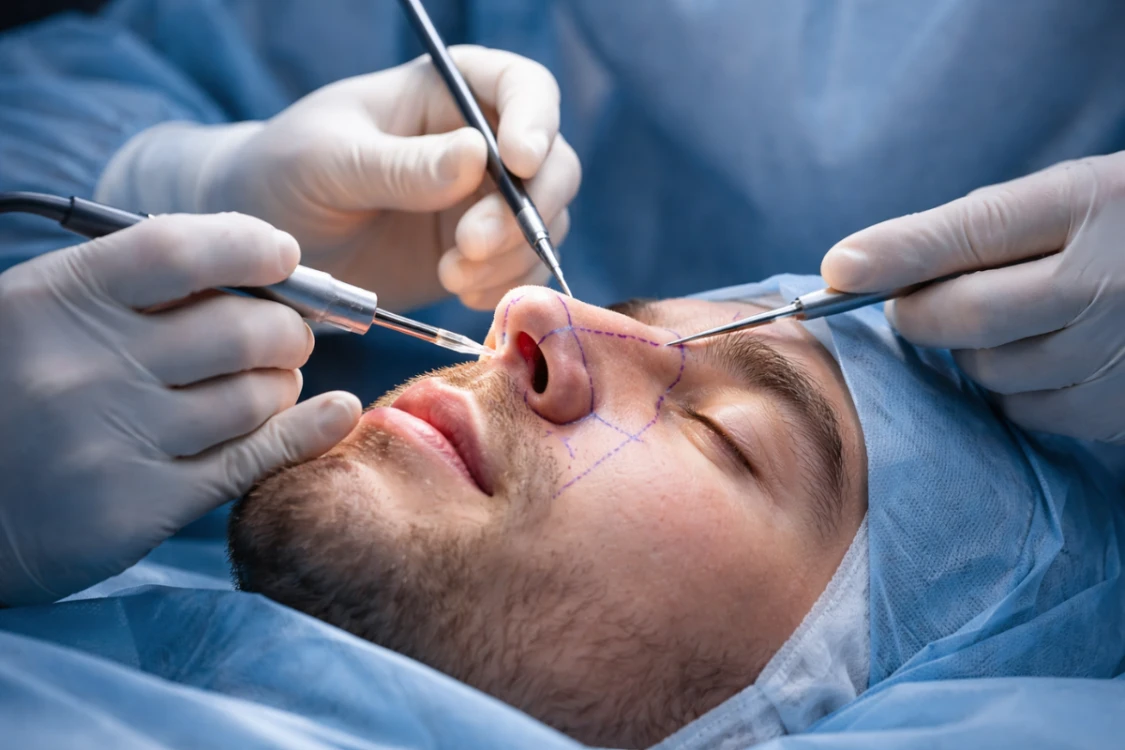
The nose is one of the most prominent features of the face, both in form and function. When trauma disrupts its structure, the consequences extend beyond cosmetic concerns. Accidents, sports injuries, and facial fractures can cause significant damage to the nasal bones and cartilage, affecting not only appearance but also breathing and quality of life. Nasal reconstruction surgery offers a comprehensive solution to restore both function and form. With advancements in modern surgical approaches, patients today have access to highly refined techniques that achieve natural, lasting outcomes.
This guide explores how post-traumatic nasal reconstruction is performed, who can benefit from it, and the role of reconstructive rhinoplasty in restoring nasal integrity after injury.
Understanding Nasal Reconstruction Surgery
Nasal reconstruction surgery refers to a series of specialised surgical techniques used to restore the normal anatomy and function of the nose following trauma. While each case is unique, the primary goal of the surgery is to repair structural damage, correct breathing issues, and restore facial symmetry. Post-traumatic nasal injuries often involve complex fractures, cartilage displacement, and soft tissue damage. In many cases, patients also suffer from nasal airway obstruction due to collapsed nasal valves or septal deviations that result from the trauma.
Reconstructive rhinoplasty is one of the most common forms of nasal reconstruction. It combines both functional and aesthetic elements to ensure the repaired nose looks balanced and functions properly. This type of surgery requires a deep understanding of nasal anatomy and the experience to tailor each procedure to the individual’s injuries.
Causes and Consequences of Nasal Trauma
Nasal injuries can occur due to many types of incidents, including sports accidents, car collisions, physical altercations, or falls. In some cases, trauma results in a nasal fracture where the bones shift out of place. In others, the injury affects deeper structures, including the septum and nasal valves, which can severely impair breathing. Swelling, bruising, and immediate deformity are common symptoms, but the full extent of the damage may not be apparent until the swelling subsides.
Beyond the physical pain, nasal trauma often leads to psychological distress due to the visible impact on facial appearance. Many patients experience loss of self-confidence, social withdrawal, or anxiety related to their appearance. In cases where the nose heals improperly or is not treated early, the result can be long-term nasal deformity and chronic breathing difficulties.
Timely evaluation and expert intervention are essential in preventing these complications. Nasal reconstruction surgery addresses both the functional and aesthetic consequences of trauma, helping patients move forward with restored confidence and improved quality of life.
Who Needs Post-Traumatic Nasal Reconstruction
Not all nasal injuries require surgical intervention, but there are specific cases where nasal reconstruction becomes necessary. Patients who notice persistent nasal obstruction, visible deformity, or asymmetry long after the initial injury should consult a specialist. Other signs include difficulty breathing through the nose, repeated sinus infections, and structural collapse of one or both nostrils.
In some cases, emergency treatment may not fully address the underlying damage. Over time, scar tissue may develop, or the nasal framework may weaken further. This is especially common in patients who delay treatment or whose fractures were left untreated during the healing process. Reconstructive rhinoplasty helps correct these late complications and rebuilds the nasal architecture to its natural state.
An experienced surgeon will conduct a comprehensive evaluation that includes nasal endoscopy and imaging to determine the extent of internal and external damage. This assessment is the foundation of a customised surgical plan that aims to restore both appearance and breathing function.
Modern Surgical Approaches to Reconstructive Rhinoplasty
The techniques used in nasal reconstruction surgery have evolved significantly in recent years. Modern surgical approaches focus on precision, preservation of healthy tissue, and long-term structural support. These methods are designed to improve outcomes, reduce the risk of complications, and achieve results that are both functional and aesthetically natural.
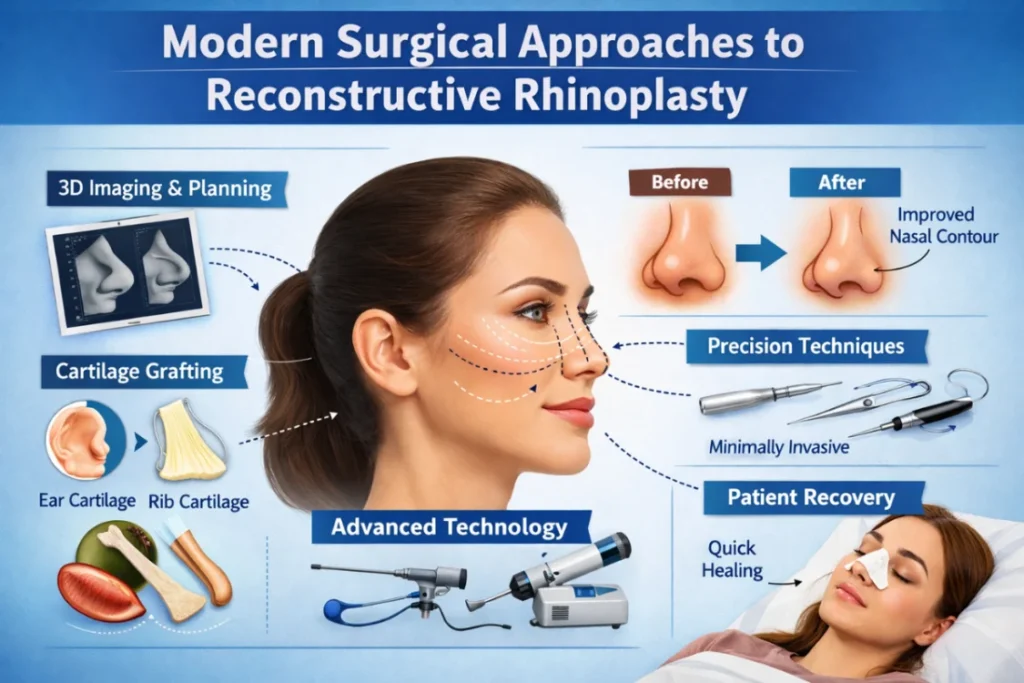
One of the foundational elements of reconstructive rhinoplasty is septoplasty. This procedure straightens and repositions the septum to restore airflow and support the nasal structure. In cases of severe trauma, surgeons may need to harvest cartilage from the septum, ear, or rib to rebuild the nasal framework. These cartilage grafts are shaped and positioned carefully to reinforce weakened areas, restore projection, and maintain symmetry.
Another essential technique involves the use of spreader grafts or batten grafts to reconstruct collapsed nasal valves. These internal supports prevent the nostrils from caving in during inhalation, which is a common problem in post-traumatic cases. In situations where the nasal bones have shifted significantly, osteotomies are performed to realign the bones and recreate a natural nasal contour.
Soft tissue reconstruction may also be necessary, particularly when the skin or underlying muscle has been damaged or scarred. Surgeons use meticulous techniques to reposition soft tissues and ensure smooth, natural skin coverage over the repaired nasal framework.
The entire surgical process is guided by advanced planning and a deep understanding of facial harmony. Modern techniques allow for minimal incisions, reduced downtime, and faster recovery, all while prioritising function and long-term stability.
Recovery and Expected Outcomes
Recovery from nasal reconstruction surgery depends on the extent of the trauma and the complexity of the procedure. In most cases, patients can expect initial swelling and bruising during the first week. A nasal splint may be used to support the healing structures and reduce movement. Pain is typically mild and manageable with medication.
By the end of the second week, visible bruising diminishes, and patients begin to notice improvements in both breathing and appearance. Although residual swelling may persist for several months, especially around the nasal tip, most patients feel confident returning to work or social activities within two weeks. The nose continues to refine over the following six to twelve months as internal healing progresses.
With expert surgical planning and proper post-operative care, the results of reconstructive rhinoplasty are long-lasting. Patients often report significant improvement in airflow, resolution of nasal obstruction, and a return to facial balance. The success of the surgery depends on individual healing and the surgeon’s expertise in achieving structural integrity and aesthetic harmony.
Functional and Cosmetic Balance in Reconstructive Procedures
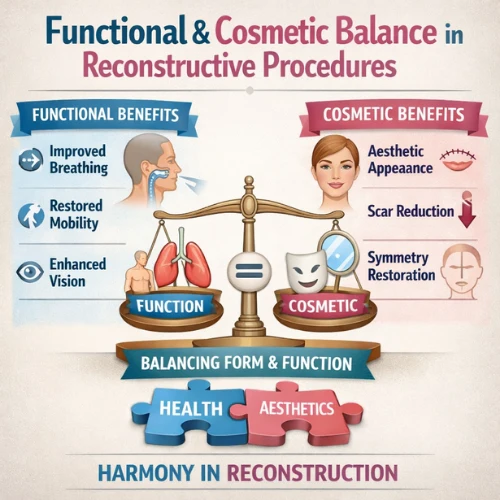
One of the key principles in nasal reconstruction is achieving the right balance between restoring function and respecting facial aesthetics. While the primary goal is to correct structural damage and restore breathing, most patients also desire a natural-looking result that blends with their facial features.
Reconstructive rhinoplasty, therefore, integrates both medical and artistic elements. Surgeons must carefully reshape the nose without overcorrecting or creating an artificial appearance. This is particularly important when the trauma has significantly altered the external shape of the nose. By using precise surgical methods and considering the unique anatomy of each patient, modern nasal reconstruction surgery can deliver outcomes that restore both confidence and comfort.
Why Choose Dr Jerome Paris for Nasal Reconstruction
Dr Jerome Paris is a globally recognised ENT and facial plastic surgeon with more than twenty years of experience in complex nasal procedures. His expertise in both functional and aesthetic surgery makes him uniquely equipped to handle post-traumatic nasal reconstruction with precision and care.
Having trained at leading institutions, including Memorial Sloan Kettering in New York, and with a professional background that spans France, the United Kingdom, and the UAE, Dr Jerome Paris offers advanced surgical techniques supported by an exceptional understanding of facial anatomy. His approach is highly personalised, beginning with a detailed consultation and ending with results that enhance both health and appearance.
Patients trust Dr Jerome Paris not only for his surgical skills but also for his commitment to patient safety, long-term results, and natural aesthetics. His practice combines medical innovation with compassionate care, ensuring that each patient receives treatment tailored to their specific injury and desired outcome.
Conclusion
Post-traumatic nasal reconstruction is a powerful solution for individuals who have experienced nasal injuries that affect their breathing, appearance, or both. Through modern surgical approaches, reconstructive rhinoplasty can restore structural integrity, improve airflow, and bring balance back to the face. For patients who have struggled with the long-term consequences of trauma, nasal reconstruction surgery offers the opportunity to breathe freely and feel confident once again.
If you or someone you know is dealing with nasal deformity or obstruction due to past trauma, seeking expert care is the first step toward recovery. With decades of experience and a reputation for excellence, Dr Jerome Paris provides comprehensive nasal reconstruction solutions tailored to each patient’s needs. To schedule a consultation and learn more about your treatment options, reach out today and begin your journey toward restoration.